
The Corporate Sustainability Reporting Directive (CSRD)
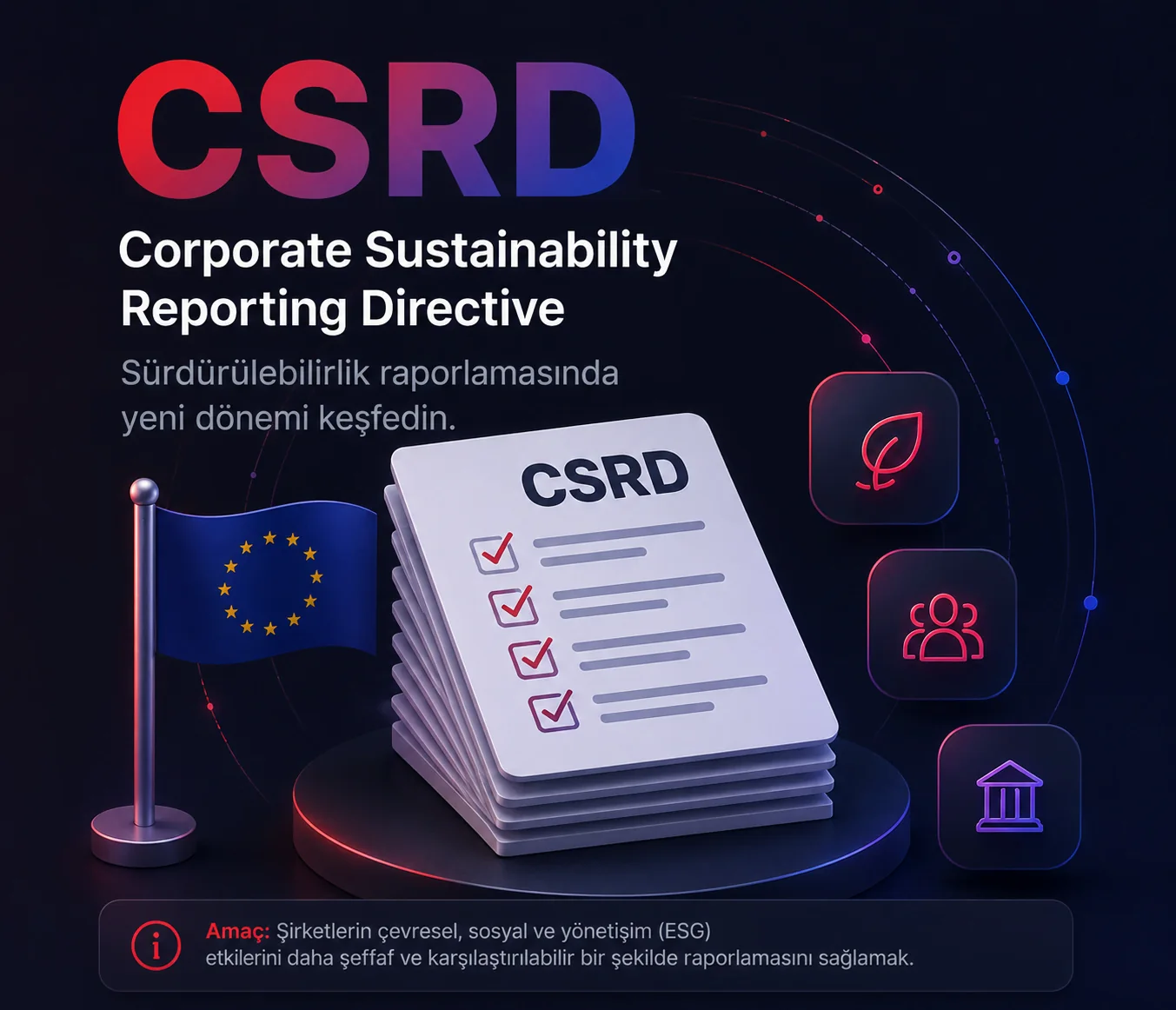
A comprehensive framework for standardized sustainability reporting across the EU. CSRD entered into force in January 2024, requiring companies to disclose detailed environmental, social, and governance information.
Transforming Corporate Sustainability Reporting
CSRD establishes mandatory sustainability reporting requirements for companies operating in the EU, ensuring transparency and accountability.
- Legal Reference
- Directive (EU) 2022/2464
- Effective Date
- January 2024
CSRD entered into force in January 2024 and requires listed and large companies to report on sustainability and ESG matters.
The regulation defines a large company as one meeting two of three criteria: 250 or more employees, €40 million or more in revenue, and €20 million or more in total assets.
CSRD aims to make corporate environmental and social impact reporting more transparent. Detailed reporting and ESG disclosures support the transition to a sustainable economy.
CSRD requires reporting across environmental, social, and governance topics.
Who Must Comply with CSRD
Companies meeting at least two of the following criteria are included in the scope.
- 01
Large Companies
Companies meeting at least two of three criteria: more than 250 employees, net turnover exceeding €40 million, or total assets exceeding €20 million.
- 02
Listed Companies
All companies listed on EU regulated markets, including small and medium-sized enterprises (SMEs), with certain exemptions and simplified reporting options.
- 03
Non-EU Companies
Third-country companies with significant EU operations, including net turnover exceeding €150 million in the EU and at least one subsidiary or branch in the EU.
- 04
Financial Institutions
Credit institutions, insurance undertakings, and other financial entities, regardless of their legal form, meeting the size criteria.
What Must Be Reported
Comprehensive disclosure requirements under CSRD
Environmental Matters
Climate change mitigation and adaptation, water and marine resources, resource use and circular economy, pollution, and biodiversity and ecosystems.
Social & Human Rights
Equal treatment and opportunities, working conditions, respect for human rights, and measures to prevent corruption and bribery.
Governance Factors
The role of administrative, management, and supervisory bodies in sustainability matters, including risk management and internal control systems.
Value Chain
Information about the company's value chain, including upstream and downstream business relationships, and their impact on sustainability matters.
European Sustainability Reporting Standards
Mandatory reporting standards ensuring consistency and comparability The European Sustainability Reporting Standards (ESRS) were adopted by the European Commission on July 31, 2023. These standards provide detailed requirements for sustainability reporting, ensuring consistency and comparability across companies and sectors. ESRS includes cross-cutting standards applicable to all companies, as well as topical standards covering specific environmental, social, and governance matters. Companies must report in accordance with these standards, with certain exemptions for SMEs and specific sectors.
Cross-Cutting Standards
General principles, materiality assessment, and governance requirements applicable to all companies.
Environmental Standards
Climate change, pollution, water and marine resources, biodiversity, and resource use and circular economy.
Social Standards
Workforce, workers in the value chain, affected communities, and consumers and end-users.
Governance Standards
Business conduct, including anti-corruption, anti-bribery, and political engagement.
Sector Standards
Complementary reporting requirements for specific industries and business models.
Phased Implementation Schedule
Understanding when CSRD requirements apply to different company categories
Phase 1: 2024
Companies already subject to NFRD must comply. First reports covering 2024 financial year published in 2025.
Phase 2: 2025
All large companies not previously covered by NFRD must comply. Includes companies meeting size criteria for the first time.
Phase 3: 2026
Listed SMEs, small and non-complex credit institutions, and captive insurance companies. Option to delay by two years available.
Phase 4: 2028
Third-country companies with significant EU operations. Sector-specific standards may apply with additional delays.
External Assurance of Sustainability Information
Ensuring reliability and accuracy of reported information
CSRD introduces mandatory external assurance of sustainability information. Initially, companies must obtain limited assurance, which provides moderate confidence that the reported information is free from material misstatements.
The directive envisions a transition to reasonable assurance in the future, which would provide higher confidence levels. Assurance must be provided by independent assurance service providers, ensuring the credibility and reliability of sustainability reports.
Benefits of CSRD Compliance
Core business advantages created by CSRD compliance
Investor Confidence and Access
Risk Management and Mitigation
Competitive Advantage and Reputation
Legal Compliance and Assurance
Sustainable Growth
Why CSRD Matters
The value and impact of comprehensive sustainability reporting
Enhanced Transparency
Stakeholders gain access to comprehensive, comparable sustainability information, enabling informed decision-making.
Greater Accountability
Companies are held accountable for their environmental and social impacts, driving responsible business practices.
Improved Competitiveness
Better sustainability performance can enhance brand reputation, attract investment, and improve market positioning.
Better Risk Management
Comprehensive reporting helps identify and manage sustainability-related risks and opportunities.
Drives Innovation
Reporting requirements encourage companies to develop innovative solutions for sustainability challenges.
EU Green Deal Alignment
Supports the EU's broader sustainability objectives, including climate neutrality and circular economy goals.
How Digital Product Passports Support CSRD Compliance
Digital Product Passports (DPPs) provide detailed product-level sustainability data that can directly support CSRD reporting requirements. By tracking environmental impacts, resource use, and supply chain information at the product level, DPPs enable companies to aggregate accurate data for their sustainability reports.
DPPs help companies meet CSRD requirements for value chain reporting, environmental disclosures, and social impact assessments. The granular data collected through DPPs ensures accuracy and traceability, making CSRD reporting more reliable and comprehensive.
Learn How DPPs Support CSRD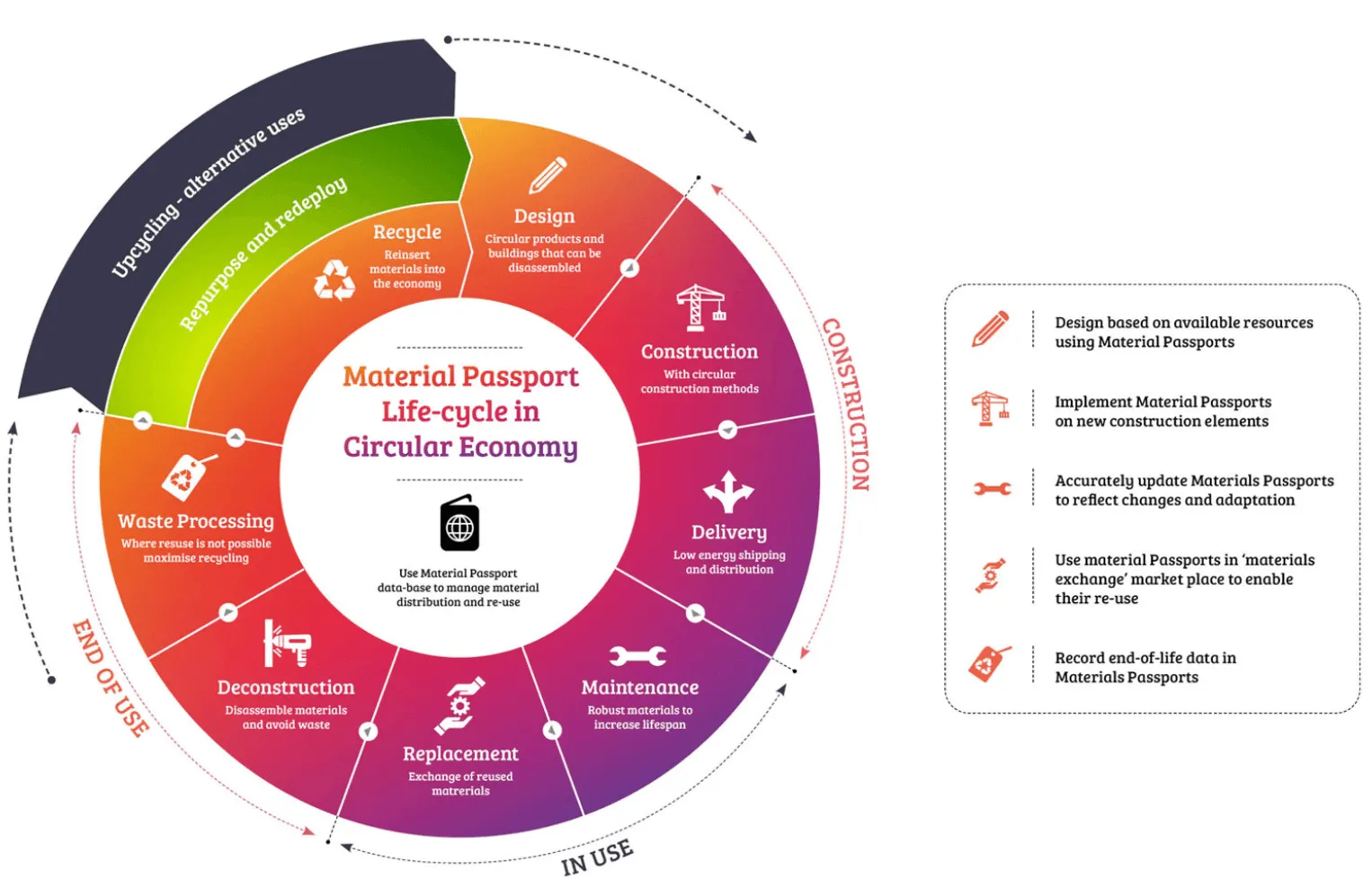
Building the Future of Transparency
Every product tells a story. We make sure it's a transparent one.